
Seat Leon >> Drive assist sensors and cameras
Front radar
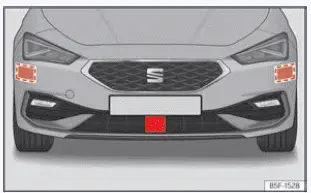
Fig. 127 On the front bumper: front and side
radar sensors.
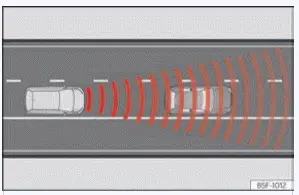
Fig. 128 Detection area.
Your Seat Leon may be fitted with high-precision radar sensors embedded discreetly into the front bumper assembly ››› Fig. 127.
The primary front radar continuously scans for objects within its forward detection zone ››› Fig. 128 and provides vital sensor data to support the following advanced functions:
- Front Assist autonomous emergency braking.
- Adaptive Cruise Control (ACC).
Depending on prevailing road geometry and weather conditions, the front radar can maintain an active operational range of up to 120 m (400 ft).
Meanwhile, secondary side radars ››› Fig. 127 scan objects within their specialized lateral detection zones to prevent your Seat Leon from colliding with crossing traffic when pulling out or entering an intersection or junction. These side radar units provide essential support to the:
- Junction assist function.
Automatic deactivation of supported functions
The forward-facing assistant sensors deactivate automatically when the vehicle management system detects that they are permanently obscured or blocked. This condition typically occurs, for example, when a thick layer of wet snow, ice, or heavy mud has settled over the sensor face.
If a sensor is forced to deactivate due to lost visibility, the instrument cluster will temporarily display an advisory warning message such as "Driver assist now limited. Front sensors without visibility", accompanied by an audible warning chime.
Because the front sensor systems are temporarily blinded and unable to see the road ahead, both the ACC and Front Assist functions will be indicated on the dash as being permanently disabled until cleared.
WARNING
- The operational visibility and effectiveness of the radar sensors can be severely impaired by surface dirt, grime, or adverse environmental influences—such as heavy rain, dense fog, falling snow, mud, wind-blown dust, insects, or road salt.
- Regularly clean the sensor area on the front bumper precisely as outlined in the section titled Cleaning the exterior. As soon as the radar sensor clears and starts detecting properly again, the warning message will disappear from the screen and all associated assist functions will become available once more.
NOTICE
- If the radar sensors are covered in dirt, misaligned, or poorly adjusted, the Front Assist or Junction assist systems may issue unnecessary false warnings and apply the vehicle brakes inappropriately.
- The normal operation of the radar sensors can be temporarily disrupted by strong reflections of the emitted radio signals. This phenomenon may occur, for example, inside an enclosed multi-storey car park or due to the close presence of large metallic objects (such as heavy steel guard rails or temporary metal sheets used in road construction zones).
- A radar sensor may lose its correct alignment if it receives even a minor physical impact. This can compromise overall system efficacy or cause the system to shut down automatically.
If you suspect or feel that the front radar sensor is physically damaged or out of alignment, proactively switch off the Front Assist, ACC, and Junction assist functions within the menu to prevent erratic behavior. If this occurs, have the sensor recalibrated and adjusted promptly.
- The front bumper of your Seat Leon should only ever be repainted using specialized paint types explicitly authorized by SEAT. Junction assist and radar functions may be impaired or malfunction entirely if unauthorized paints or thick coatings are used.
Interior camera
Depending on the specific equipment level and trim package, your Seat Leon may be fitted with an advanced interior camera positioned directly on the housing of the interior rear view mirror. This camera is engineered to monitor the driver and their driving behaviour in real-time to provide essential data in support of the:
- Driver attention monitoring function.
NOTICE To guarantee that the interior camera's functionality is never compromised, please take the following practical points into consideration:
- Never place stickers, accessories, or objects that could cover or obstruct the designated field of vision of the camera.
- Always adjust the interior rear view mirror correctly to its proper position.
Front camera
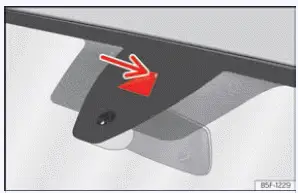
Fig. 129 On the windscreen: field of vision of
the Lane Assist system camera.
Depending on the vehicle equipment variant, your Seat Leon may be equipped with a high-resolution front camera mounted securely on the upper section of the front windscreen.
This optical front camera detects road lane boundaries, lane markings, and painted lines to provide vital visual data supporting the following advanced driver assistance functions:
- Lane Assist.
- Travel Assist.
- Emergency assist.
Automatic deactivation of supported functions
The front camera will automatically switch itself off when, among other conditions, the system detects that its optical field of vision is permanently obscured or blocked. This situation typically arises when a heavy layer of snow, frost, or thick ice accumulates on the exterior glass.
If the camera is temporarily deactivated due to poor visibility, the instrument cluster will display an advisory text message reading "Driver assist now limited. Front sensors without visibility", accompanied by an attention-grabbing audible warning chime.
Because the front optical sensor systems are temporarily blinded and unable to see the road ahead, each of the Lane Assist, Travel Assist, and Road Sign Recognition functions will be shown on the dash as being permanently disabled until visibility is restored.
NOTICE To avoid disrupting the normal operation of these safety systems, observe the following rules:
- Clean the optical field of vision of the windscreen camera regularly and make sure it is completely free of dirt, snow, frost, and ice.
- Never cover or obstruct the camera's field of vision with any objects or stickers.
- Inspect the windscreen periodically to ensure it is not cracked or damaged directly within the camera's optical field of vision.
Rear radar
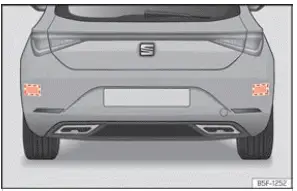
Fig. 130 Rear view of the vehicle: radar sensor
areas.
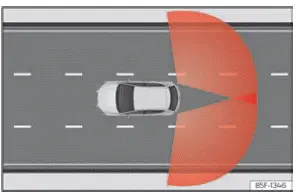
Fig. 131 Sensor detection zones.
The advanced rear radar sensors on your Seat Leon are located discreetly on the left and right sides behind the rear bumper fascia, remaining completely invisible from the outside ››› Fig. 130. These powerful sensors continuously monitor both your blind spots and traffic approaching from behind ››› Fig. 131.
They provide critical operational support for the following safety features:
- Side Assist.
- Rear Cross Traffic Alert.
- Exit Warning.
Automatic deactivation of supported functions
The rear radar sensors will deactivate automatically when, among other reasons, the control unit detects that one of the radar modules is permanently covered or blocked.
This can happen, for example, when a dense layer of wet snow, mud, or road ice builds up directly in front of one of the bumper sensor zones.
Whenever this occurs, a relevant advisory text message will appear clearly on the instrument cluster display.
Control lamps
 Side Assist function not available.
 Rear Cross Traffic Alert function not available.
 Exit Warning not available.
NOTICE
- The internal radar sensors housed behind the rear bumper can easily be physically damaged or pushed out of alignment in the event of minor low-speed collisions—such as when parking or manoeuvring in tight spaces. This kind of impact can cause the system to disconnect automatically or suffer from severely diminished functionality.
- To ensure that the rear radar sensors continue to work properly, always keep the rear bumper area clean, free of heavy snow and ice, and unblocked.
- The rear bumper assembly should only ever be repainted using specialized paint types expressly authorized by SEAT. Lane departure and radar warning functions may be limited or malfunction entirely if unauthorized paint thicknesses or types are applied.
- The operational visibility and signal penetration of the radar sensors can be negatively affected by fallen leaves, packed snow, dense haze, road grime, or dried mud. Clean the bumper surface directly in front of the sensors whenever necessary.
- Never rely on automated lane changing aids or the rear cross traffic alert system if the rear bumper radar sensors are caked in dirt.
- Radar wave operation can also be severely disrupted or interfered with if external items like aftermarket bicycle racks, heavy luggage carriers, or trailer attachments obstruct the detection field of the radars.
Ultrasound sensors
The front and rear bumpers of your Seat Leon are embedded with high-precision ultrasound sensors designed to support and execute the following intelligent parking functions:
- Park Assist.
- Park Assist Plus.
- Rear Park Assist.
NOTICE
- Physical damage or impacts to the radiator grille, bumper fascias, wheel arches, or vehicle underbody can alter the precise alignment and orientation of the ultrasound sensors. This mechanical shift can negatively affect park assist performance. Have the sensor calibration checked promptly by a specialized workshop.
- An oversized number plate or licence plate holder that exceeds the standard mounting dimensions, or a bent, curved, or deformed number plate, can cause false obstacle detections or lead to a loss of sensor visibility.
Note
- To guarantee flawless operation, keep all ultrasound sensors clean, free of snow, ice, and road grime, and never cover them with stickers, bumper guards, or other extraneous objects.
- If you use high-pressure washers or steam-jet cleaning equipment for washing your car, do not aim the nozzle directly at the sensors unless you do so very briefly, and always maintain a safe cleaning distance of at least 10 cm away.
- Fitting certain accessories to the front end of your Seat Leon—such as a promotional licence plate frame or advertising holder—may physically interfere with the acoustic waves and disrupt the normal operation of Park Assist.
Rear camera
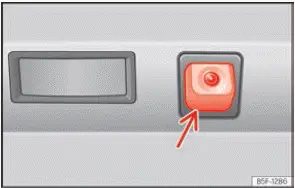
Fig. 132 On the rear bumper: location of the
rear assist camera.
A discreet optical camera integrated into the rear bumper assists the driver whenever reverse parking or slow-speed manoeuvring is performed, providing vital live visual feedback to support the following function:
- Rear View Camera.
WARNING Installing an aftermarket licence plate frame or bulky surround can physically interfere with the video feed shown on the infotainment screen by narrowing and obstructing the camera's optical field of vision.
NOTICE
- To guarantee optimal system operation, keep the reversing camera lens clean, clear of snow and ice, and do not cover it with stickers, protective films, or other objects.
- Never use abrasive cleaning products, harsh chemicals, or rough cloths to clean the delicate camera lens.
- Do not pour or spray hot or warm water directly onto the glass to melt away accumulated ice or snow from the camera lens. Doing so can cause thermal shock and crack or permanently damage the camera unit.
 General notes
Safety advice
WARNING
The ultimate responsibility for safe driving rests with the driver at all times. Advanced driver assist systems are never a replacement for driver attentiveness and focus ...
 Cruise control system
Introduction
The cruise control system (GRA) helps you maintain a constant, preselected driving speed effortlessly on your Seat Leon, enhancing comfort on long journeys.
Speed range
The electronic ...
See also:
Loosening the wheel bolts
The wheel bolts must be loosened before raising the vehicle.
Fig. 155 Changing the
wheel: Loosening the
wheel bolts
Loosening
– Fit the box spanner as far as it will go over the wheel bolt.
...
