
Seat Leon >> Head-on collisions and the laws of physics
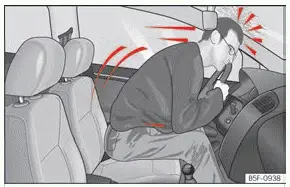
Fig. 20 A driver not wearing a seat belt may be
thrown forward violently.
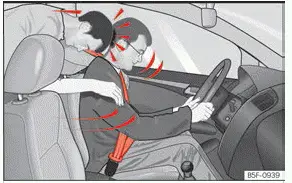
Fig. 21 Any rear seat occupants not wearing
a seat belt may be thrown forward violently,
hitting the driver who is wearing the seat belt.
The effects of the fundamental laws of physics during a head-on collision are straightforward: the moment any vehicle begins to move, a physical force known as "kinetic energy" starts acting upon both the automobile and everyone traveling inside it.
The total magnitude of this kinetic energy depends directly on the speed of the vehicle combined with the combined weight of the automobile and its occupants. The heavier and taller the occupants are, the greater the kinetic energy that must be safely "absorbed" in the event of a sudden accident.
The single most significant variable, however, is the vehicle's speed. If your travel speed doubles—for example, increasing from 25 km/h (15 mph) to 50 km/h (30 mph)—the resulting kinetic energy is multiplied by a factor of four.
Even at moderate speeds between 30 km/h (19 mph) and 50 km/h (30 mph), the physical forces acting upon human bodies during a sudden collision can easily exceed one metric tonne (1000 kg). At higher highway speeds, these impact forces increase exponentially.
Vehicle occupants who neglect to wear their seat belts are not physically anchored to the vehicle frame. In a head-on collision, they will continue moving forward at precisely the same high speed the Seat Leon was traveling just prior to impact.
This physical reality applies not only to frontal impacts, but to all types of vehicle accidents and collisions.
Even at relatively low driving speeds, the deceleration forces acting on the human body during a crash are so immense that it is physically impossible to brace oneself using the hands or arms. During a head-on collision, unbelted occupants will be hurled uncontrollably forward through the cabin, crashing violently against the steering wheel, dashboard panel, or front windscreen ››› Fig. 20.
It is equally critical for all rear-seat passengers to wear their seat belts properly at all times. Without a fastened belt, rear occupants will be projected forward with tremendous momentum through the vehicle interior during an impact. An unbelted passenger in the back not only puts their own life in extreme peril but also strikes and severely injures front-seat occupants who are properly buckled up ››› Fig. 21.
 Seat belt buckled indication
Lights up red
This visual alert indicates that the driver or at least one of the vehicle passengers has not fastened their safety belt.
The dedicated control lamp lights up to remind the driver ...
 Fastening and unfastening the seat
belt
Fig. 22 Insert the latch plate of the seat belt
into the buckle.
Fig. 23 Release the seat belt's latch plate.
Properly worn seat belts hold the vehicle occupants securely in the exact ergon ...
See also:
Engine oil standards
WARNINGOnly SEAT approved engine oils must be used; see
applicable
data under - ServiceNet, Documentation, Vehicle Engineering,
Approved Engine Oils .
7) Longlife oil can be u ...
