
Seat Leon >> Tyre pressure monitor system
Tyre pressure monitor indicator
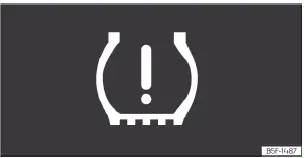
Fig. 256 Instrument cluster: warning of loss of tyre pressure.
The indirect tyre pressure monitoring system continuously monitors wheel speed readings from the anti-lock braking system (ABS) speed sensors to compare the dynamic rolling radius of each individual wheel.
If the effective rolling circumference of one or more tyres changes due to pressure loss, the tyre pressure monitoring indicator alerts the driver immediately on the instrument cluster with an illuminated warning lamp and an accompanying driver text notification ››› Fig. 256. If a single wheel is suffering from air loss, its exact position on the car will be highlighted on the display screen.
 Loss of pressure: Check left tyre pressure!
Change in wheel diameter
The effective rolling diameter of a wheel changes under several operating conditions, including when:
- The tyre pressure has been altered or adjusted manually.
- The internal inflation pressure becomes inadequate due to a leak or natural pressure loss.
- The structural casing of the tyre suffers internal or external damage.
- The vehicle sags unevenly due to unbalanced cargo distribution.
- The wheels on a specific axle carry a significantly heavier payload (for example, when travelling fully loaded).
- Snow chains are mounted on the front drive wheels.
- The compact temporary spare wheel is fitted to the car.
- A single wheel or tyre has been swapped on an axle.
The response of the tyre pressure monitoring warning lamp  may be delayed, or the system may refrain from issuing an alert under specific driving scenarios—such as during aggressive performance driving, on snow-covered or unpaved loose surfaces, or when driving with snow chains attached.
Calibrate the tyre pressure monitoring indicator
Every time you adjust cold inflation pressures, replace one or more tyres, or fit different wheels to your Seat Leon, you must recalibrate the tyre pressure monitoring system. Recalibration is equally necessary after rotating wheels between the front and rear axles to establish a fresh baseline.
Always execute the calibration procedure while the vehicle is parked on level ground with cold tyres. If you calibrate the system while the tyres are warm after extended driving, repeat the pressure verification and calibration process once the rubber has cooled down completely prior to setting off on your next journey.
- Switch on the ignition without starting the engine.
- Store the corrected cold inflation pressures in the infotainment system menu: press function button
 >
 Vehicle > Exterior > Tyres.
- OR select:
 >
 Vehicle > Status > Tyres.
Once you have successfully stored the new inflation pressure settings in your Seat Leon, a confirmation message appears on the screen, the tyre warning light on the instrument cluster flashes briefly, and an audible alert tone sounds to signal that the baseline has been updated.
The indirect tyre pressure loss indicator relies on the anti-lock braking system (ABS) wheel speed sensors to constantly monitor and compare individual wheel rotational speeds and effective rolling circumferences. The system builds and continuously calibrates its reference values after the car has been driven over an extended distance at varying road speeds.
If you plan to drive your Seat Leon under very heavy cargo or passenger loads, you must adjust the inflation pressures to the full recommended load values prior to performing the system calibration ››› Fig. 256.
WARNING Operating your vehicle with uneven tyre pressures or severe under-inflation can cause structural tyre failure, overheating, and a sudden loss of vehicle control, potentially resulting in severe or fatal accidents.
- If the tyre warning lamp
 illuminates while driving, reduce your speed immediately and refrain from making sharp steering or hard braking maneuvers. Pull over in a safe location as soon as possible to inspect the inflation pressure and physical condition of all four tyres.
- The tyre pressure monitoring system functions accurately only when all tyres are inflated to their exact correct cold pressures before performing the prescribed system reset calibration.
- If your inspection reveals no visible punctures or structural failure requiring an immediate wheel change, proceed at a low speed to the nearest professional workshop to have the tyre pressures checked and corrected.
Note
- When driving a Seat Leon equipped with brand-new tyres at high speeds for the first time, initial thermal expansion can cause slight pressure shifts that may trigger a temporary air pressure warning.
- If the system detects low tyre pressure when the ignition is switched on, an audible chime sounds. A warning tone also sounds if a technical fault occurs within the monitoring system.
- Driving on unpaved gravel tracks or engaging in aggressive sports driving for prolonged periods can temporarily blind or deactivate the monitoring system. In such cases, the warning lamp will indicate a temporary fault, but the light will extinguish automatically once normal road surfaces and driving behavior are resumed.
- Never rely solely on the automated tyre pressure monitoring system. Inspect your tyres regularly to verify correct cold inflation pressures and check for physical damage such as punctures, sidewall cuts, gouges, or surface bulges. Promptly remove any stones, glass, or debris trapped in the tread grooves that have not caused an actual puncture.
- The tyre pressure monitoring indicator is integrated with vehicle dynamics and will not function if a fault is present in the electronic stability control (ESC) or anti-lock braking system (ABS).
Troubleshooting
 Tyre pressure low
The control lamp lights up continuously in yellow.
The cold inflation pressure in one or more wheels has dropped significantly below the baseline stored by the driver, or a tyre has sustained structural damage. When triggered, an audible warning chime sounds and a descriptive text message appears on the central instrument cluster display.
 Stop the vehicle! Pull over as soon as it is safe to do so in a secure location clear of active traffic.
- Inspect all four tyres visually and measure their inflation pressures.
- Replace any tyre showing obvious structural damage or severe pressure loss.
 Fault in the tyre pressure loss indicator
The control lamp flashes for approximately 1 minute upon switching on the ignition and then remains illuminated continuously in yellow.
- If all tyres are checked and inflated to their correct cold pressures, switch the ignition off and back on again.
- Re-calibrate the tyre pressure monitoring system baseline through the infotainment settings menu.
- If the warning light continues to indicate a fault, drive cautiously to a specialized workshop to have the system diagnosed.
 Removing and installing a wheel
Proceed with changing the wheel only after loosening all wheel nuts slightly while on the ground and safely raising the vehicle with the factory jack.
When removing or fitting the heavy wheel assembl ...
 Tyre repair
...
See also:
Turn signal and main beam lever
Fig. 105 Turn signal and main beam lever.
Move the steering column lever into the required position depending on your driving maneuver:
Right turn signal indicator or right-hand side parki ...
