
Seat Leon >> Check and refill the coolant
Engine cooling fluid
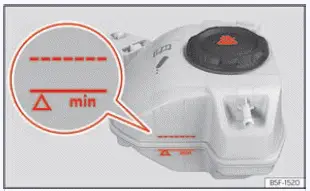
Fig. 232 In the front compartment: coolant
expansion tank.
Preliminary steps
- Park your Seat Leon securely on a firm, flat, and level ground surface.
- Switch off the ignition and wait patiently until the engine has fully cooled down.
- Open and secure the front bonnet.
- The combustion engine coolant expansion tank can be easily identified by the distinct graphic symbol stamped onto its filler cap ››› Fig. 232.
Check the level
When brand new vehicles are delivered from the factory, the coolant level inside the reservoir may occasionally sit slightly above the designated maximum marked area.
This is completely normal and expected. It is neither necessary nor recommended to extract or suck any coolant out.
1. When the engine is completely cold, inspect and check the coolant fluid level using the graduated side markings visible on the translucent expansion tank ››› Fig. 232. The fluid level should always lie squarely between the minimum and maximum indicator marks.
2. If the fluid level has dropped below the minimum indicator mark ( ) etched on the tank, you must top up with fresh coolant. Please note that when the engine is warm and operating under pressure, the coolant level may sit slightly above the upper maximum mark.
3. Never attempt to add coolant if there is no fluid visible at all within the coolant expansion tank.
The coolant level cannot always be checked accurately on every model variant because container visibility inside the engine bay may occasionally be partially obstructed by surrounding components.
If the fluid level cannot be inspected clearly or read with absolute certainty, consult a qualified specialized workshop for assistance.
When the motor coolant level drops dangerously low, the dedicated cooling system warning light will illuminate on your Seat Leon instrument cluster. In this event, immediately seek professional assistance from specialist personnel.
Topping up the fluid
If you find that the coolant level is too low and no professional workshop is immediately accessible, observe the following emergency instructions:
1. Always protect your face, hands, and arms against sudden splashes of hot coolant or scalding steam by placing a thick, clean cloth over the expansion tank cap before opening.
2. Carefully and slowly unscrew the cap in an anticlockwise direction.
3. Only top up with fresh, factory-approved coolant adhering to the correct technical specifications.
Only top up the reservoir if there is still some remaining fluid visible in the expansion tank; otherwise, running dry could result in severe engine damage! If you cannot see any coolant whatsoever in the expansion tank, do not continue driving your Seat Leon and seek immediate specialist assistance.
4. If there is still some coolant left at the bottom of the reservoir, top up with the correct coolant mixture up to the tank's upper maximum mark and re-check the fluid level the following day. If the level drops again shortly after, drive to a workshop and request a thorough pressure check of the cooling system.
The active coolant level must always remain between the designated marks on the side of the expansion tank ››› Fig. 232.
Never overfill or exceed the top edge of the marked area.
5. Screw the expansion tank cap back on tightly until fully seated.
If engine coolant meeting the recommended technical specifications is unavailable during an unexpected roadside emergency, do not mix in any unauthorized coolant additives! In this specific situation, top up using pure distilled water only. Ensure that you have the correct coolant additive proportion restored by a professional as soon as possible thereafter.
High voltage system coolant (valid for hybrid vehicles
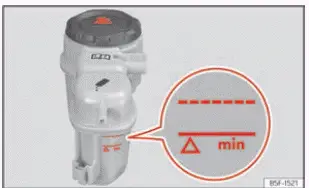
Fig. 233 In the front compartment: coolant
expansion tank.
Preliminary steps
- Park your hybrid Seat Leon securely on a firm, flat surface.
- Wait until the high-voltage electrical system and power electronics have fully cooled down.
- Open the front bonnet.
- The high-voltage system's dedicated coolant expansion tank can be readily recognized by the specific icon stamped on its cap
 ››› Fig. 233.
Check the level
When the vehicle is newly delivered from the factory, the coolant level for the high-voltage circuit may occasionally rest slightly above the marked operational area.
This is entirely normal behavior. It is not necessary to drain or suck any coolant out.
1. Check the coolant level against the graduated side markings of the expansion tank when the powertrain components are fully cold ››› Fig. 233. The fluid level should be positioned securely between the lower and upper marks.
2. If the level drops below the minimum threshold mark ( ) on the tank body, top up with the specified coolant fluid. When the high-voltage system is warm during operation, the coolant level may expand slightly above the upper reference mark.
3. Never add or top up coolant if there is no coolant at all visible inside the high-voltage system ››› coolant expansion tank.
Please note that the coolant level cannot always be checked or read with absolute accuracy on all vehicle trim versions, as the visibility of the fluid level through the walls of the high-voltage coolant expansion tank can occasionally be visually obstructed by adjacent components.
If the exact coolant level cannot be read with certainty, contact a qualified specialized workshop to perform a professional inspection.
Topping up the fluid
If you determine that the coolant level is too low and there is no professional workshop immediately nearby, carefully observe the following emergency guidelines:
1. Always protect your face, hands, and arms against sudden bursts of hot liquid coolant or scalding steam by placing a thick, clean cloth over the high-voltage coolant expansion tank cap.
2. Carefully and slowly unscrew the reservoir cap.
3. Add exclusively fresh coolant conforming to the manufacturer's precise technical specifications, filling only up to the upper level mark. After topping up, the active coolant level must rest securely between the minimum and maximum indicator marks on the high-voltage system coolant expansion tank ››› Fig. 233.
4. Close and screw the cap back on tightly until fully sealed.
5. On the following day, re-check the high-voltage system coolant level. If the fluid level in the expansion tank has fallen below the minimum indicator mark  , you must have the cooling system thoroughly checked by a specialist workshop without delay.
If, during an unexpected roadside emergency, you do not have immediate access to coolant meeting the required specifications, top up using pure distilled water only as a temporary measure. Afterwards, take your Seat Leon to a specialist workshop as soon as possible to have the correct coolant additive concentration and mixture restored.
WARNING Escaping steam and hot engine coolant can cause severe, disfiguring skin burns and scalding injuries.
- Never open the front bonnet if you can visually see or audibly hear steam or boiling coolant escaping from the engine compartment. Always wait patiently until all discharging steam or coolant noises have completely stopped.
Directly touching extremely hot mechanical parts will result in severe skin burns.
WARNING Before opening the front bonnet of your Seat Leon, always make sure to observe the following safety precautions:
- Firmly apply and engage the electronic parking brake.
- Always keep children far away from the front engine compartment area and never leave them unattended or unsupervised.
WARNING When the engine or high-voltage system is hot, the respective cooling system operates under high thermal pressure. Never open the expansion tank cap while hot. Pressurized hot coolant may violently splash out and cause severe burns and other physical injuries.
- Turn the reservoir cap slowly and very carefully in an anticlockwise direction while applying slight downward pressure.
- Always protect your face, hands, and arms from hot coolant and scalding steam by wrapping a large, thick cloth around the cap area.
NOTICE When emergency top-ups are required, use only pure distilled water! Alternative types of water contain harmful mineral and chemical substances that can cause significant internal corrosion damage. If you have added non-distilled water, you must have the entire engine cooling system flushed and refilled immediately by a specialist workshop.
- When heated during operation, liquid coolant naturally expands. If coolant is filled excessively above the marked operational area, the excess liquid may overflow when hot and cause damage to vehicle components.
- When adding coolant, never fill above the upper edge of the graduated marked area ››› Fig. 232, ››› Fig. 233. Otherwise, as operating temperatures rise, the expanding excess fluid will be forcefully expelled from the cooling system and could damage surrounding parts.
- If the system loses or leaks a large volume of coolant, only refill once the motor has cooled down completely.
If there is a significant, unexplained loss of coolant, it indicates a potential leak or fault in the cooling circuit.
Drive immediately to a specialist workshop to have the system pressure-tested and repaired. Ignoring this could result in catastrophic engine overheating and damage.
- Never add coolant if the expansion tank is completely empty! Doing so indicates that air may have entered and formed locks in the cooling system. Do not continue driving your Seat Leon and seek professional assistance from specialist personnel.
Running with an empty tank can lead to severe engine damage.
- When changing or topping up operating fluids, always make sure that you pour the correct, approved fluids strictly into their corresponding filler necks. Using incorrect operating fluids can lead to severe mechanical malfunctions and permanent engine damage in your Seat Leon.
 Coolant tank
✓ Valid for: hybrid vehicles.
Fig. 231 Engine compartment: Coolant tanks
Electrified hybrid variants of the Seat Leon are equipped with an advanced thermal architecture featuring two completely ...
 Brake fluid
Check and refill the brake fluid
Fig. 234 Engine compartment: brake fluid
reservoir cap.
Checking the brake fluid level
The active brake fluid level in your Seat Leon must always remain position ...
See also:
Vehicle sound
✓ Valid for: hybrid vehicles
The electric drive system in your plug-in hybrid Seat Leon operates with exceptional silence, producing far less operational noise than a conventional combustion engine ...
