
Seat Leon >> Introduction
Safely towing a vehicle requires practice and precision, particularly when using a conventional tow cable. Both the driver of the towing vehicle and the driver of the Seat Leon must be thoroughly familiar with the special handling characteristics and operational features associated with towing.
Inexperienced drivers should strictly refrain from undertaking towing tasks.
During the entire towing process, ensure that no excessive pulling forces or sudden jolts occur. When driving on unpaved roads or surfaces without a firm foundation, there is always an elevated risk of overloading and damaging the structural attachment parts.
Always take into account all relevant local legal provisions and statutory regulations governing tow starting and general vehicle towing.
Tow start
Tow starting refers to the procedure of starting a vehicle's engine while another vehicle puts it into motion by pulling it with a tow bar or cable.
Your Seat Leon can be tow started using either a rigid tow bar or a flexible tow cable.
Towing
Towing is defined as one vehicle pulling another vehicle that is temporarily disabled or not in a proper condition to drive under its own power.
The vehicle can be safely towed using either a certified tow bar or a tow cable.
- The absolute speed limit during towing is 50 km/h (approx. 30 mph).
- The maximum permitted towing distance must not exceed 50 km (approx. 30 miles).
Tow cable and tow bar
Using a rigid tow bar is inherently safer for the vehicle, helping to avoid shock loads and accidental impact damage. A flexible tow cable should only be utilized if a rigid tow bar is unavailable.
A towing rope should possess a slight degree of elasticity to cushion sudden movements and prevent severe mechanical stress on both vehicles. It is highly advisable to use a tow rope manufactured from high-strength synthetic fiber or similarly elastic material.
Towing with a tow truck
If a professional breakdown lorry or flatbed truck is used for recovery, Seat Leon models equipped with an automatic transmission are only permitted to be towed with their front wheels fully suspended off the ground.
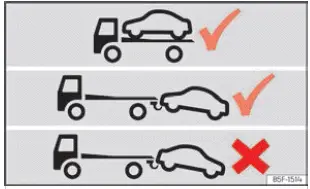
Fig. 220 Transport with a tow truck: vehicles with
an automatic gearbox and front wheel drive.
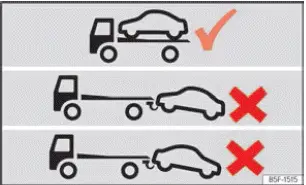
Fig. 221 Transport with a tow truck: vehicles with
automatic transmission and 4Drive.
Towing vehicles with four-wheel drive (4Drive)
Four-wheel drive Seat Leon models featuring the 4Drive system can be towed using a proper tow bar or tow rope. However, it is strictly forbidden to suspend only the front or only the rear axle while towing with wheels on the ground. Doing so would cause severe, irreversible damage to the central transmission and differential components.
Deactivate roll-away protection (vehicles with automatic transmission)
If necessary to release the electronic parking brake and transmission lock so that the vehicle can be pushed or towed freely:
- Keep the foot brake pedal firmly depressed and select the N (Neutral) position on the gear selector lever. Next, confirm the "Deactivate roll-away protection" prompt in the Infotainment System screen.
- Alternatively: open the vehicle settings menu in the infotainment system
 > Vehicle > Brakes > Deactivate the "Roll-away protection function".
WARNING When towing a Seat Leon, the driving dynamics, steering weight, and braking capacity change drastically and require heightened attention.
WARNING Never allow the vehicle to be towed if its electrical power system is completely dead or inactive.
- When towing, never remove the key from the ignition or switch off the ignition system using the ignition start button. If power is lost, the electronic steering column lock could suddenly engage and block completely, making it impossible to steer the vehicle. This could lead to a catastrophic loss of vehicle control, an accident, and serious personal injury.
- If the vehicle completely loses electrical power during the towing process, stop the operation immediately in a safe location and seek professional assistance from specialized personnel.
NOTICE Towing your Seat Leon with a tow cable or tow bar carries an inherent risk of causing structural or cosmetic damage to the vehicle if not executed with extreme care.
- If towing must be performed using a cable or bar, special care and minimal acceleration must be maintained at all times.
- Whenever possible, have the vehicle transported securely on a flatbed tow truck.
NOTICE If the vehicle is pushed manually by hand, vulnerable exterior components such as the tail light units, the side spoilers flanking the rear window, and large sheet metal body panels can easily be dented or damaged.
In addition, the upper rear tailgate spoiler could become detached under improper manual pressure.
- Avoid applying manual pushing force directly against delicate components like the tail light clusters, rear window side spoilers, large body panels, or the rear roof spoiler.
NOTICE Removing and reinstalling the bumper towing eye cover and threading in the towing eye bolt can scratch or damage the surrounding paintwork of your Seat Leon.
- To prevent cosmetic damage to the painted bumper, remove and replace the protective cover and screw in the towing eye with utmost care.
NOTICE Using a towing eye bolt that is unsuited or not officially approved for your specific vehicle model can cause structural damage to the chassis thread points.
- When towing, always use the vehicle's dedicated towing eye, which is safely stored as part of the standard on-board tool kit, or an equivalent properly rated towing eye.

 Instructions for tow-starting and
towing
During a towing maneuver, a change of driving direction can still be clearly signalled on the towed Seat Leon even when the hazard warning lights are actively switched on. To accomplish this, simply o ...
See also:
Air filter: Clean housing and renew filter
element
Special tools and workshop equipment required
Torque wrench 2-10 Nm - VAG 1783-
Hose clip pliers - VAS 6362-
NOTICE
Always use a genuine air filter cartridge .
Use a silicone-free ...
