
Seat Leon >> Fuel types
Identification of fuels
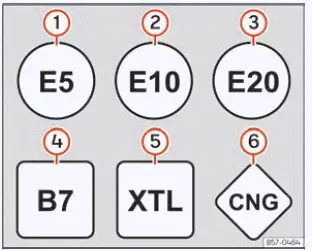
Fig. 211 Identification of fuels according to
European Union (EU) Directive 2014/94/
Automotive fuels are clearly categorized and identified by distinct standardized symbols located on fuel dispensing pumps and on your Seat Leon's fuel tank filler flap (with variations depending on national regulations). This standardized identification system completely eliminates any ambiguity or confusion when selecting the correct fuel grade.
- Designates unleaded petrol containing a maximum ethanol blend of up to 5% (E5).
- Designates unleaded petrol containing a maximum ethanol blend of up to 10% (E10).
- Designates petrol containing a higher ethanol blend of up to 20% (E20).
- Designates automotive diesel fuel manufactured in compliance with the EN 590 standard. The numerical suffix indicates the maximum permitted percentage of biodiesel blended into the fuel; for example, "B7" signifies a maximum biodiesel content of 7%.
- Designates paraffinic synthetic diesel fuel conforming to the EN 15940 standard.
- Designates natural gas: "CNG" stands for Compressed Natural Gas.
Type of petrol
The exact grade of petrol required for your specific Seat Leon engine configuration is specified clearly on an informational label located on the inner side of the fuel tank filler flap.
Because your vehicle is equipped with a sensitive exhaust catalytic converter system, it must be operated exclusively using unleaded petrol.
All petrol used must comply strictly with the European standard EN 228 and be completely sulphur-free. Always observe local fuel regulations and standards applicable in the country where you are driving. Fuel grades are officially differentiated worldwide by their octane ratings expressed as Research Octane Number (RON) or via the Anti-Knock Index (AKI).
Super unleaded petrol 95 octane petrol or normal 91 octane petrol at least
We strongly recommend refuelling your Seat Leon with super 95 octane petrol (91 AKI). If super grade is temporarily unavailable, normal 91 octane petrol (87 AKI) may be used as an emergency alternative, though this will result in a slight, noticeable loss in engine power and performance.
Super unleaded petrol, 95 octanes at least
You should use super unleaded petrol with an octane rating of at least 95 RON (91 AKI) to ensure optimal engine efficiency.
If super petrol is unavailable and you must refuel urgently, you may use normal 91 octane petrol (87 AKI). In this scenario, you must drive using only moderate engine speeds and light throttle inputs. Refuel with the correct super grade petrol at the earliest opportunity.
Unleaded super plus 98 octane petrol or super 95 octane petrol at least
We recommend running your engine on super plus 98 octane petrol (93 AKI) for peak performance. If unavailable, super 95 octane petrol (91 AKI) may be used (which may cause a minor decrease in power output).
If neither super plus nor super petrol can be found, normal 91 octane petrol (87 AKI) can be used temporarily in an emergency. Under these conditions, maintain moderate engine speeds and apply light throttle pressure, refuelling with high-octane petrol as soon as possible.
NOTICE
- Fuels containing a high percentage of ethanol exceeding standard limits, such as E30 through E100 blends, must never be used in standard engines. Doing so would cause severe, permanent damage to the fuel system components.
- Even a single instance of refuelling with leaded petrol or unauthorized metallic fuel additives results in permanent chemical poisoning and destruction of the catalytic converter's effectiveness.
- Only use specialized petrol fuel additives that have been officially approved and tested by SEAT S.A. Aftermarket products marketed to boost octane ratings or prevent engine knocking often contain harmful metallic additives that ruin the engine and catalytic converter, and such products must never be used.
- Never use fuels marked at the pump as containing metallic compounds. Lead Replacement Petrol (LRP) fuels contain high concentrations of metallic additives that carry a severe risk of internal engine damage.
- Running your engine at high RPMs and full throttle while using petrol with an octane rating lower than the specified grade required for your engine can cause severe internal mechanical damage.
Note
- You can safely use fuel with an octane rating higher than the minimum requirement specified for your engine without causing any harm.
- In countries where sulphur-free petrol is commercially unavailable, fuel featuring a low sulphur content may be used as an acceptable alternative.
Ethanol fuel
✓ Valid for: vehicles with Totalflex engines
You can easily identify Seat Leon models equipped with a Totalflex engine by inspecting the special label marked "Petrol/ethanol" affixed to the inside of the fuel tank filler flap.
Vehicles featuring Totalflex engines can be operated smoothly using standard unleaded petrol (95 octane / 91 AKI) conforming to ANP No. 57 regulations, as well as with high-percentage ethanol fuel blends. The physical refuelling procedure is carried out in the exact same manner as standard petrol refuelling.
Always take into account the general guidelines regarding fuel types.
Note SEAT recommends filling the fuel tank exclusively with standard petrol every 10,000 km to help dissolve and flush away any combustion impurities or residue that continuous use of E100 pure ethanol fuel might leave behind in the engine architecture.
Diesel
✓ Valid for: vehicles with diesel engines
Please note and adhere carefully to the fuel grade and specification information printed on the inside of your Seat Leon fuel tank filler flap.
Standard diesel fuel can thicken, form paraffin crystals, and gel at very low ambient winter temperatures, which can severely hinder engine starting or disrupt smooth engine operation.
Always inquire with your service station attendant or check pump labelling to ensure that the diesel fuel being dispensed is fully formulated and suitable for cold-weather winter use.
Water in the fuel filter
If your Seat Leon diesel engine variant is equipped with a specialized fuel filter featuring an integrated water separator element, the instrument cluster display may alert you by showing the following warning notification:
 Water in the fuel filter.
If this warning message appears, bring your vehicle to a qualified specialized workshop immediately so that technicians can professionally drain and service the fuel filter assembly.
NOTICE
- Never use Fatty Acid Methyl Ester (FAME) biodiesel blends that fail to meet the rigorous EN 590 standard, nor should you ever use petrol, heating oil, alternative fuels, or chemical thinning agents, as these substances will severely damage the high-pressure fuel injection system and internal engine components.
- If an incorrect fuel type has been accidentally filled into the tank, do not start the engine under any circumstances.
Doing so carries an immediate risk of destroying the fuel system and engine! Immediately seek professional assistance and towing.
 Refuelling
Safety warnings regarding fuel handling
WARNING
Automotive fuel is extremely flammable and volatile, and mishandling it can result in severe burns, catastrophic fires, and other serious personal inj ...
 AdBlue
Information about AdBlue
AdBlue consumption rates on your Seat Leon will vary depending on individual driving style, vehicle load, operating temperatures of the exhaust aftertreatment system, and the ...
See also:
Removing and installing wind deflector
Removing
Note
To remove the wind deflector -3- it is not necessary to remove the
bracket -1-.
Completely open the panoramic window.
Push against the frame of the wind deflector -3- to loosen ...
