
Seat Leon >> Introduction
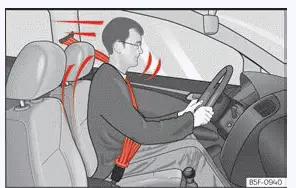
Fig. 18 Drivers with properly worn seat belts
will not be thrown forward in the event of
sudden braking.
Properly worn seat belts hold vehicle occupants securely in the correct ergonomic position during all driving maneuvers. They also help prevent uncontrolled body movements inside the cabin that may result in severe injury, while significantly reducing the risk of being thrown out of the vehicle in the event of a collision.
Vehicle occupants wearing their seat belts correctly benefit greatly from the inherent ability of the belt webbing to absorb kinetic energy during deceleration. In addition, the front crumble structure of your Seat Leon and other integrated passive safety features (such as the advanced airbag system) are specifically engineered to dissipate the kinetic energy released in a crash. Taken together, all of these safety features work in unison to reduce impact forces and, consequently, lower the risk of injury. This is why it is vital to fasten your seat belt before every trip, even when simply driving short distances around the corner.
Always ensure that all your passengers fasten their seat belts correctly before setting off. Worldwide accident statistics consistently demonstrate that wearing seat belts is the single most effective means of substantially reducing injury severity and improving survival odds in a major collision. Furthermore, properly positioned seat belts enhance the protective capability of supplemental airbags during an impact. For this reason, buckling up is mandatory by law in almost all countries.
Although your Seat Leon is equipped with a comprehensive network of airbags, seat belts must always be fastened and worn properly. The front airbags, for example, are triggered only under specific head-on collision conditions. They will not deploy during minor frontal impacts, side collisions, rear-end impacts, vehicle rollovers, or accidents where the impact force remains below the pre-set trigger threshold programmed into the electronic control unit.
Important safety instructions for the use of seat belts
- Always wear and position your seat belt strictly as described in this owner's guide section.
- Ensure that all seat belts remain fully accessible, latch smoothly at all times, and show no signs of physical damage or wear.
WARNING
- If seat belts are worn incorrectly or neglected entirely, the risk of sustaining critical or fatal injuries in a crash increases dramatically.
Optimal physical protection from seat belts can only be achieved when they are worn and adjusted properly across the body.
- Never allow two passengers (including young children) to share the same seat belt or lap strap.
- Never unbuckle a seat belt while the vehicle is in motion. Doing so creates an immediate risk of fatal injury during sudden braking or collisions.
- The seat belt webbing should never rest over hard, rigid, or fragile items (such as spectacles, pens, or key rings) stored in pockets, as this can cause severe localized injuries upon impact.
- Do not allow the seat belt webbing to become damaged, twisted, pinched in doors, or rubbed against sharp structural edges.
- Never wear the shoulder strap under your arm, behind your back, or in any other non-standard position.
- Bulky or loose clothing (such as a thick winter coat worn over a sweater) prevents the seat belt from fitting snug against the body, impairing retractor performance and reducing protective effectiveness.
- The insertion slot of the seat belt buckle must remain completely clear of paper, debris, or foreign objects to ensure the latch plate locks securely into place.
- Never use aftermarket seat belt clips, retaining clamps, or similar positioning devices to alter the natural fit or tension of the belt webbing.
- Frayed, worn, or torn seat belt webbing, as well as damaged anchorage hardware, belt retractors, or buckle assemblies, can fail catastrophically during a crash. Check the physical condition of all seat belts in your Seat Leon at regular intervals.
- Seat belt assemblies that have been subjected to stress and stretched during an accident must be completely replaced by a specialized technical workshop. Replacement may be necessary even if no obvious surface damage is visible. The structural seat belt anchorages should also be inspected thoroughly.
- Never attempt to repair, modify, or dismantle a damaged seat belt yourself. Seat belt components must not be removed or altered in any way.
- Keep the seat belt webbing clean at all times; heavy dirt or grime can impede the smooth operation of automatic belt retractors.
 Seat belts
...
 Seat belt buckled indication
Lights up red
This visual alert indicates that the driver or at least one of the vehicle passengers has not fastened their safety belt.
The dedicated control lamp lights up to remind the driver ...
See also:
Driver attention monitor
Introduction
Fig. 8 On the instrument cluster display: Driver
attention monitor symbol.
The driver attention monitor integrated into your Seat Leon informs the driver whether his or her driving b ...
